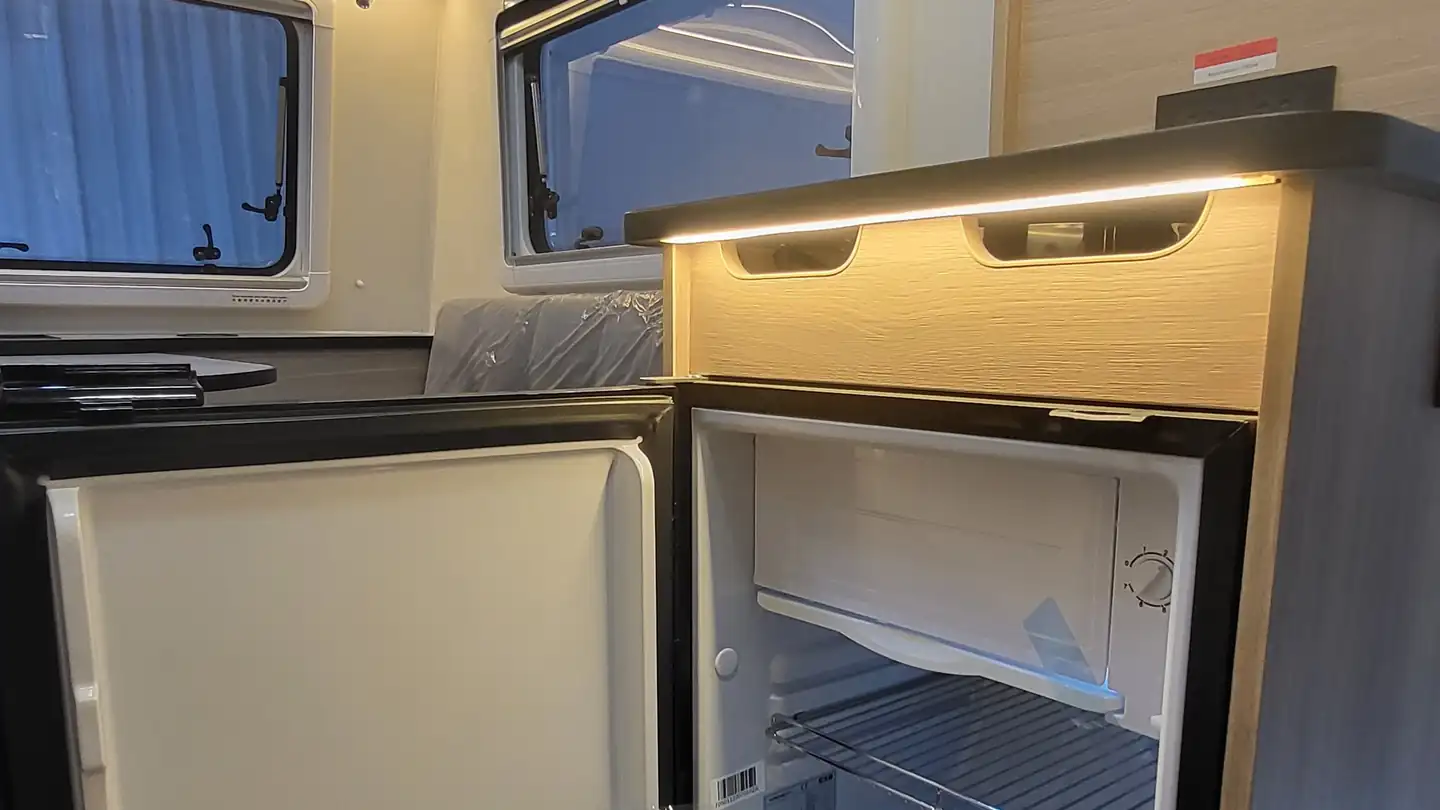
12V Campervan Fridge Guide: Compressor vs Absorption vs Cool Box
Choose the right fridge for your campervan or caravan: compressor, absorption and thermoelectric types compared, with sizing, power use, installation and hot-weather tips.
A reliable fridge makes life on the road much easier. It keeps food fresh, drinks cold and lets you shop less often, which is especially valuable on off-grid trips and in hot climates. But fridges are also one of the biggest continuous power users in most campervans, so choosing and installing the right one matters for both comfort and your electrical system.
This guide explains the main types of mobile fridge, how to size one, how to install it properly and how to keep it efficient in hot weather.
The Three Main Types
1. Compressor Fridges
Compressor fridges work like household fridges, using a small 12V or 24V compressor to move refrigerant. They are the most popular choice for modern campervan builds.
Advantages:
- Efficient on 12V, making them suitable for solar and battery systems.
- Cool well even in high outside temperatures.
- Many can also run as freezers.
- Work well at moderate angles, which helps when parked on slopes.
Drawbacks:
- Higher purchase price than simple cool boxes.
- Some noise when the compressor runs, though modern models are generally quiet.
2. Absorption (3-Way) Fridges
Absorption fridges use heat to drive a cooling process. They can run on gas, mains electricity or 12V (usually only while driving). They are common in caravans and older motorhomes.
Advantages:
- Silent operation.
- Run on gas, which is very useful off-grid without large batteries.
Drawbacks:
- Inefficient on 12V, so 12V mode is usually only practical when the engine is running.
- Performance drops in very hot weather.
- Need to be fairly level to work properly.
- Gas operation requires proper ventilation and flue installation.
3. Thermoelectric Cool Boxes
These use a thermoelectric element to cool slightly below outside temperature.
Advantages:
- Cheap and lightweight.
- Simple to use.
Drawbacks:
- Limited cooling; they can only cool a certain amount below ambient temperature, which is a real problem in hot climates.
- Often run continuously, using significant power.
Best for: short day trips, not off-grid living.
Chest vs Upright Fridges
Chest (top-opening):
- Cold air stays inside when opened, so they are efficient.
- Often portable and can be moved outside.
- Harder to find items at the bottom.
Upright (front-opening):
- Easier access and organisation, like a home fridge.
- Fit neatly into kitchen units.
- Lose more cold air each time you open the door.
Choose based on your kitchen layout and how you like to cook.
Sizing Your Fridge
Think about:
- Number of people.
- How often you can shop. Remote trips need more capacity.
- Do you need a freezer? Some dual-zone fridges offer both.
- Physical space and weight.
Bigger is not always better: a larger fridge uses more power and space. Many couples find a medium-size fridge sufficient if they shop every few days.
Power Use and Your Electrical System
A compressor fridge cycles on and off; its average consumption depends on outside temperature, how full it is, how often you open it, the thermostat setting and how well it is ventilated. Manufacturers usually provide consumption figures under specific test conditions. Use these as a guide, but expect higher use in hot weather.
To plan your system:
- Look up the fridge's rated consumption.
- Add a safety margin for hot conditions.
- Include it in your daily power budget along with lights, fans and devices.
- Size your battery and solar accordingly.
Our electrical and solar basics guide explains how to calculate a power budget.
Many compressor fridges have a battery protection setting that switches the fridge off when battery voltage drops too low. Set it appropriately for your battery type.
Installation Tips
Ventilation Is Critical
Compressor fridges release heat from the back or sides. If that heat cannot escape, the fridge works harder, uses more power and may struggle to stay cold.
- Follow the manufacturer's minimum clearance distances.
- Provide a low vent for cool air to enter and a high vent for warm air to escape where the fridge is built into a cabinet.
- Consider a small, quiet fan to help airflow in tight spaces.
Absorption fridges running on gas must have the vents and flue required by the manufacturer and regulations.
Wiring
- Use cable of adequate thickness to reduce voltage drop; fridges are sensitive to low voltage.
- Fit a correctly rated fuse close to the battery.
- Keep cable runs as short as practical.
Securing the Fridge
A fridge is heavy when full. Secure it firmly so it cannot move during braking or an accident. Upright fridges need door catches that hold when driving.
Insulation
Placing the fridge away from heat sources, such as the cooker or sun-facing walls, helps. Insulating the van well also reduces fridge workload; see our insulation guide.
Keeping the Fridge Efficient in Hot Weather
In summer in the Middle East and the Mediterranean, fridges work hard. Tips:
- Pre-cool the fridge on mains power before a trip.
- Load cold items rather than warm ones.
- Keep it full, even with water bottles, as a full fridge holds temperature better.
- Open it less often and decide what you need before opening.
- Park in shade and use reflective window covers.
- Check the vents are not blocked by bags or gear.
- Set the thermostat sensibly; colder than necessary uses more power.
Our guide to staying cool in a campervan has more heat strategies that also help your fridge.
Food Safety
- Use a fridge thermometer to check the actual temperature.
- Store raw meat at the bottom in sealed containers.
- Do not leave food out in the heat.
- Clean the fridge regularly and leave the door ajar when stored to prevent mould.
Example Cost Ranges
As a labelled example only: thermoelectric cool boxes are generally the cheapest, compressor fridges cost noticeably more, and premium dual-zone compressor models are at the top of the range. Prices vary by country and brand, so compare local suppliers. Include ventilation, wiring and any battery or solar upgrade in your budget, as covered in our conversion cost breakdown.
Which Fridge Should You Choose?
- Off-grid campervan with solar: compressor fridge.
- Caravan used mostly on campsites with hook-up or gas: absorption fridge works well.
- Occasional day trips: a thermoelectric cool box or a quality passive cool box.
- Long trips in hot climates: compressor fridge with good ventilation and adequate solar.
Troubleshooting Common Problems
- Fridge not getting cold: check ventilation clearance, thermostat setting and door seal.
- Fridge switching off: battery voltage may be dropping too low because of thin cables, a weak battery or a protection setting that is too high.
- Ice building up: check the door seal and avoid opening the fridge too often in humid weather.
- Absorption fridge struggling: check the van is level and the rear vents are clear, especially in hot weather.
Final Thoughts
The right fridge depends on how you travel and how you power your van. For most modern off-grid campervans, a well-ventilated compressor fridge paired with a properly sized battery and solar system is the most dependable choice. Install it carefully, give it room to breathe, and it will keep your food fresh wherever the road takes you.
Gear we recommend
As an Amazon Associate we earn from qualifying purchases. Learn more.
- 12V compressor fridge freezer for campervan on Amazon
- Portable power station 1000Wh on Amazon
- Fridge thermometer wireless on Amazon
- 12V cool box thermoelectric on Amazon