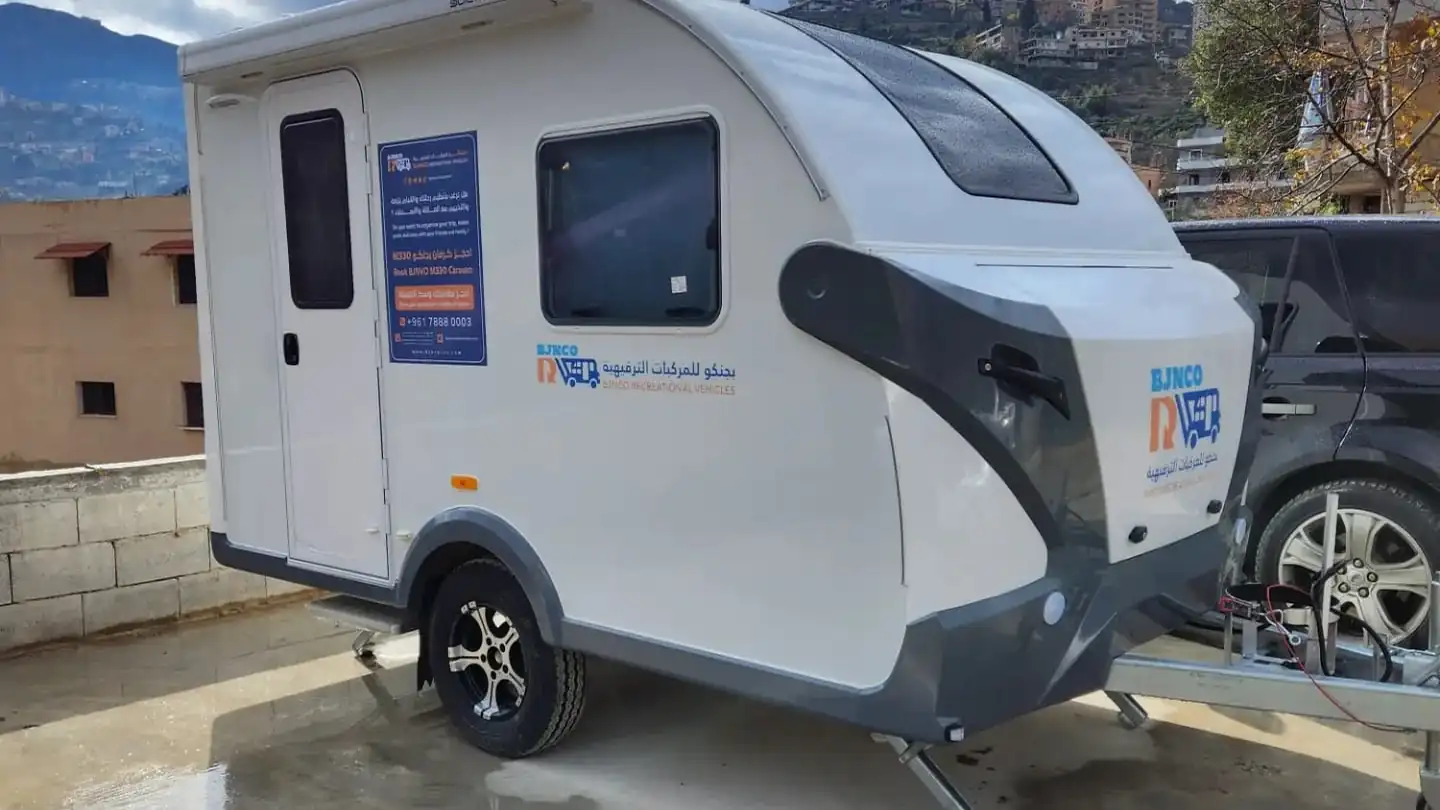
Camping in Dinnieh and Qornet es Saouda by Campervan
A practical guide to taking a campervan or caravan into Dinnieh and the high country around Qornet es Saouda, Lebanon's highest summit: seasons, roads, water, where to stop and how to camp responsibly.
Dinnieh (also written Danniyeh) is one of the greenest and least crowded mountain areas in north Lebanon. It rises from the hills above Tripoli to high, open country on the slopes of the Mount Lebanon range, where Qornet es Saouda, the highest summit in the country, stands at a little over 3,000 metres. For anyone with a campervan, pickup camper or small caravan, it offers cool summer air, wide views, springs, orchards and some of the quietest roads in Lebanon.
This guide is written for people planning to drive and camp there. It is not a hiking guide, and conditions change from year to year, so treat it as a starting point and always check locally before you go.
Where Dinnieh Is and How It Feels
Dinnieh sits in the North Governorate, inland from Tripoli and to the north of the Qadisha Valley and Bsharri. The main town is Sir ed-Danniyeh, and the district is a mosaic of villages, terraced fields, fruit trees, pine and juniper woods, and streams that run strongly in spring.
As you climb, the landscape changes. Lower villages feel busy and agricultural. Higher up, the land opens into rocky plateaus and grazing ground with long views. Above the tree line, around the Qornet es Saouda massif, the terrain becomes bare, stony and alpine in character, with snow lying late into spring in most years.
That variety is what makes the area good for van travel: you can spend a day between village bakeries and fruit stalls, then sleep somewhere cool and quiet with a wide sky.
Best Seasons to Visit
- Late spring (May to June): fields are green, streams are full and nights are fresh. Snow may still block the highest tracks early in the season.
- Summer (July to August): the most popular time for camping. Days are warm but far cooler than the coast, and nights at altitude can be genuinely cold, so bring warm bedding.
- Autumn (September to October): often the most pleasant season, with stable weather and harvest time in the orchards. Nights get colder quickly by late October.
- Winter: the high ground is under snow and many upper roads are not passable for normal vehicles. This is a time for experienced winter campers with suitable vehicles and local knowledge only. See our winter camping tips.
Roads and Vehicle Suitability
The main roads up from the Tripoli area into Dinnieh are paved and used by local traffic every day. They are winding and climb steadily, with some steep sections and tight bends through villages. A well-maintained van or small caravan copes fine if driven calmly.
Higher up, things change. Roads towards the high plateaus and the slopes of Qornet es Saouda can narrow, lose their surface, or become rough tracks. Whether a given track is suitable depends on recent weather, snow and repairs, and it can change between seasons.
Practical points:
- Long vans and caravans: stay on main paved roads unless you have checked the route. Turning a caravan on a narrow mountain track is difficult and sometimes impossible.
- Pickup campers and 4x4 vans: these can reach more remote spots, but ground clearance does not replace local knowledge.
- Brakes and gears: use a lower gear on long descents rather than riding the brakes. Our towing guide covers descents with a trailer.
- Fuel: fill up in the larger towns before heading high. Stations become rare on upper roads.
- Ask locally: villagers, shop owners and municipality staff usually know which tracks are open this week.
For more on choosing routes, read our guide to the best mountain roads in Lebanon for vans and caravans.
Qornet es Saouda: What to Expect
Qornet es Saouda is the high point of a long ridge, and the area around it is open, exposed and remote. Most people reach the summit area on foot, sometimes as part of organised hikes, rather than by driving to it.
If you plan to camp in the high country below the summit:
- Weather changes fast. Clear mornings can turn windy and cold. Thunderstorms are possible in summer afternoons.
- There is little shelter. Choose a spot where your vehicle is not side-on to strong wind, and avoid ridgelines in storms.
- Snowfields linger. Even in early summer, patches of hard snow can make tracks and slopes dangerous.
- Phone coverage is patchy. Tell someone your plan and expected return.
- Consider a local guide if you want to hike to the top. Local guiding services and hiking groups know the safest routes for the season.
Where People Camp
Lebanon has relatively few formal campsites, and Dinnieh is no exception. Travellers commonly use:
- Private land with permission: orchards, fields and land around guesthouses. Ask the owner first; a polite request often meets a generous welcome.
- Eco-lodges and guesthouses: some allow vans or tents on their grounds, sometimes with access to water and toilets.
- Open high ground: wild camping away from villages is practised, but land is still owned or managed by someone, and grazing areas belong to local herders' routines. Ask in the nearest village where camping is acceptable.
- Nature reserves and protected areas: these usually have their own rules on access and camping. Contact the managing body before you go.
Always check whether the municipality or landowner has any restrictions, especially in summer fire season.
Water, Power and Supplies
- Water: springs are a feature of the area, but do not assume spring water is safe to drink untreated. Filter or treat it, or carry drinking water. Our campervan water system guide explains tank sizing and filtration.
- Supplies: buy bread, vegetables, fruit, dairy and fuel in the larger villages and towns. Small shops can have limited stock in remote spots.
- Power: summer sun is strong, so solar charging usually works well. Shade from trees reduces output, so plan where you park. See campervan electrical and solar basics.
- Cold nights: a good sleeping bag and some insulation make a big difference at altitude. See our insulation guide.
Respecting the Mountain and Its People
Dinnieh is a living landscape, not an empty park. A few habits make camping welcome for everyone:
- Take all rubbish with you. Do not leave bags beside roads or at viewpoints.
- No open fires in dry season unless clearly permitted. Mountain fires spread quickly and have damaged forests in Lebanon in recent years.
- Keep away from crops and water sources when parking or washing.
- Respect herders and their animals. Drive slowly past flocks and do not block tracks they use.
- Dispose of toilet waste responsibly. Never empty a cassette into a stream or open ground. Compare options in campervan toilets compared.
- Keep noise down at night, especially near homes.
Safety and Local Conditions
Before any trip, check current conditions:
- Weather forecasts for the specific altitude, not just the coast.
- Road status, especially in spring and late autumn.
- Official travel and security advice from your government or local authorities, which can change.
- Local permissions for camping, particularly near protected areas or private land.
Carry a basic recovery kit: tow strap, shovel, traction boards if you go off paved roads, a first aid kit, warm clothes and extra water. Our campervan safety and security tips cover more.
A Sample Two-to-Three-Day Plan
This is an outline, not a fixed route, and it should be adapted to conditions:
- Day one: drive up from the Tripoli area into Dinnieh, stock up in a larger town, and find a camping spot with permission at moderate altitude among orchards or woods.
- Day two: explore higher roads by daylight, stopping at viewpoints and springs. If you plan a hike towards Qornet es Saouda, start early and consider a guide. Camp somewhere sheltered from wind.
- Day three: descend slowly, perhaps continuing towards the Qadisha Valley and the Cedars, which we cover in Akkar and the Cedars: a north Lebanon road trip.
Which Vehicle Works Best Here?
- Compact campervans and pickup campers are the most flexible, as they handle narrow roads and steep tracks better.
- Small caravans are fine for base camps on accessible private land, with day trips by car.
- Large motorhomes are best kept to main routes and established sites.
If you are still choosing, our caravan vs campervan comparison and guide to the best vans for camper conversion can help.
Final Thoughts
Dinnieh and the slopes of Qornet es Saouda reward people who travel slowly, ask locally and leave no trace. The air is cool, the views are wide and the villages are welcoming. Plan for altitude, check roads and permissions before you go, and you will find some of the most rewarding van camping in Lebanon. For wider planning across the country, start with our Lebanon camping and road trip guide.
Gear we recommend
As an Amazon Associate we earn from qualifying purchases. Learn more.
- Insulated sleeping bag 3 season on Amazon
- Hiking boots waterproof on Amazon
- Portable power station 500Wh on Amazon
- Camping lantern rechargeable on Amazon