How to Insulate a Van for Winter (Lebanon Mountains and Coast)
A practical winter how-to for van owners and buyers in Lebanon: what to prioritize for Cedars, Faraya and Dinnieh cold plus wet coastal nights, condensation control, roof floor windows cab curtain, heating and common mistakes — with Maxus Class B interior photos.
Lebanese winter is not one climate. One weekend you are parked under the Cedars or above Faraya with frost on the roof; the next you are on the wet coast with humidity that turns every cold window into a waterfall. A van that feels fine in July can become a cold, dripping box by December if the insulation package was an afterthought.
This article is a practical winter how-to for owners and buyers: what to prioritize, in what order, and how insulation works with heating and ventilation. It is not a materials encyclopedia (that is our campervan insulation materials guide). Here the question is: what keeps you warm and dry on Lebanese winter trips, whether you are buying a ready Class B or converting a panel van.
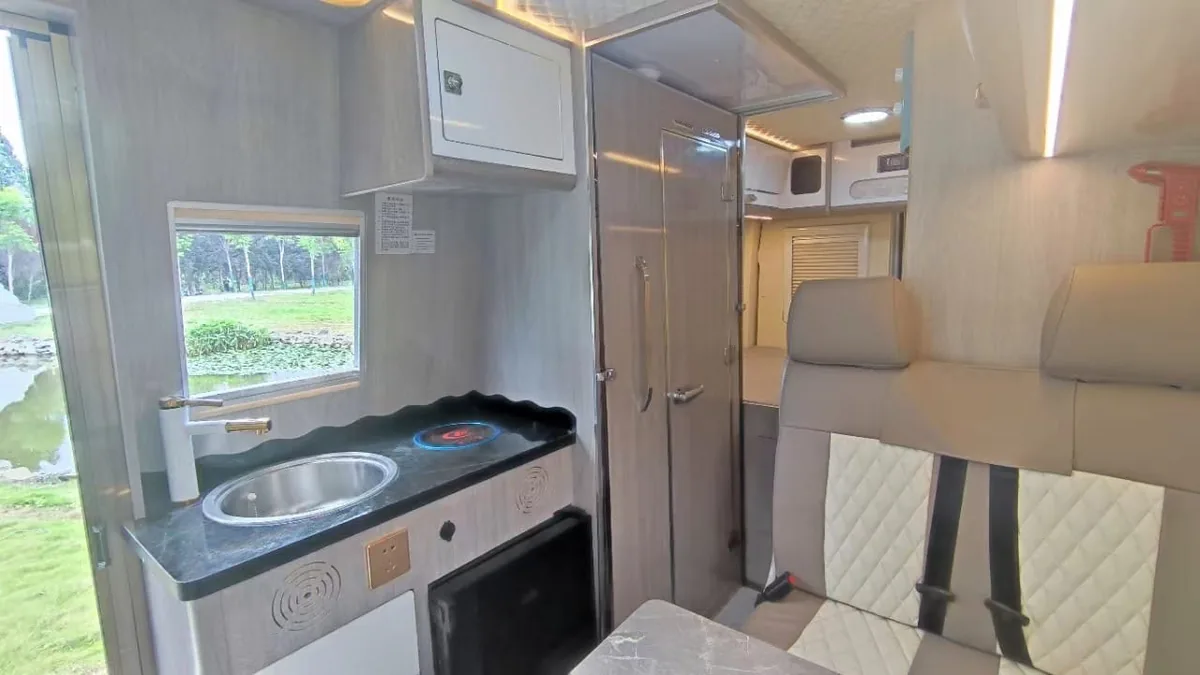
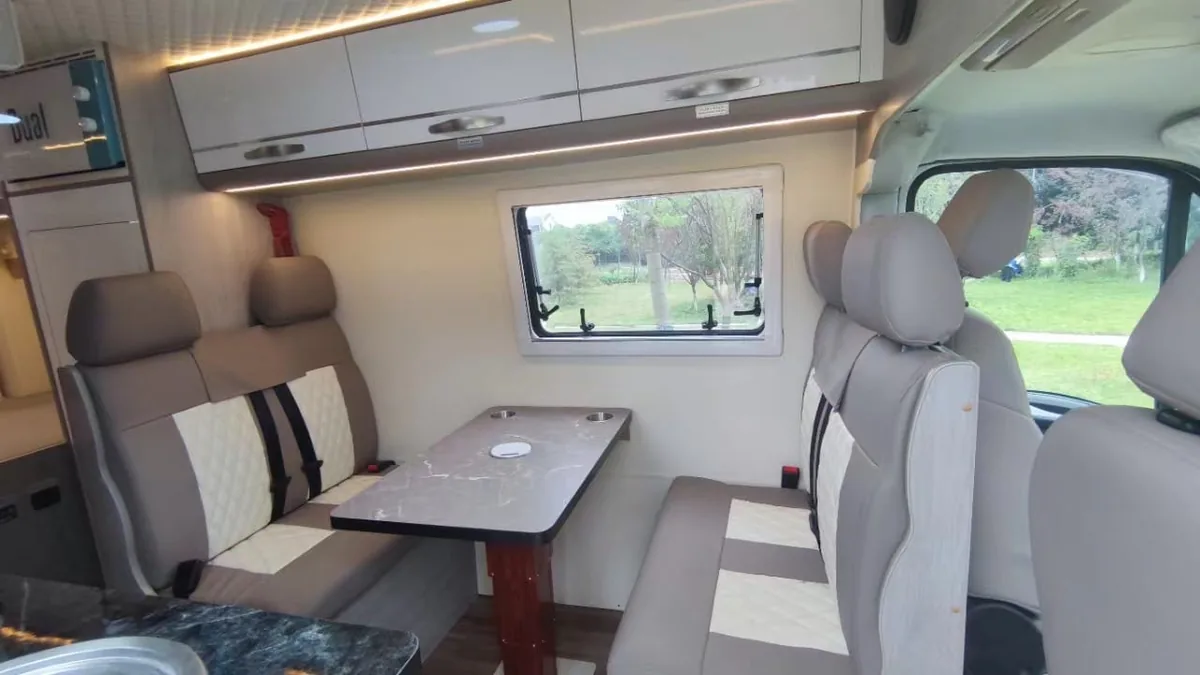
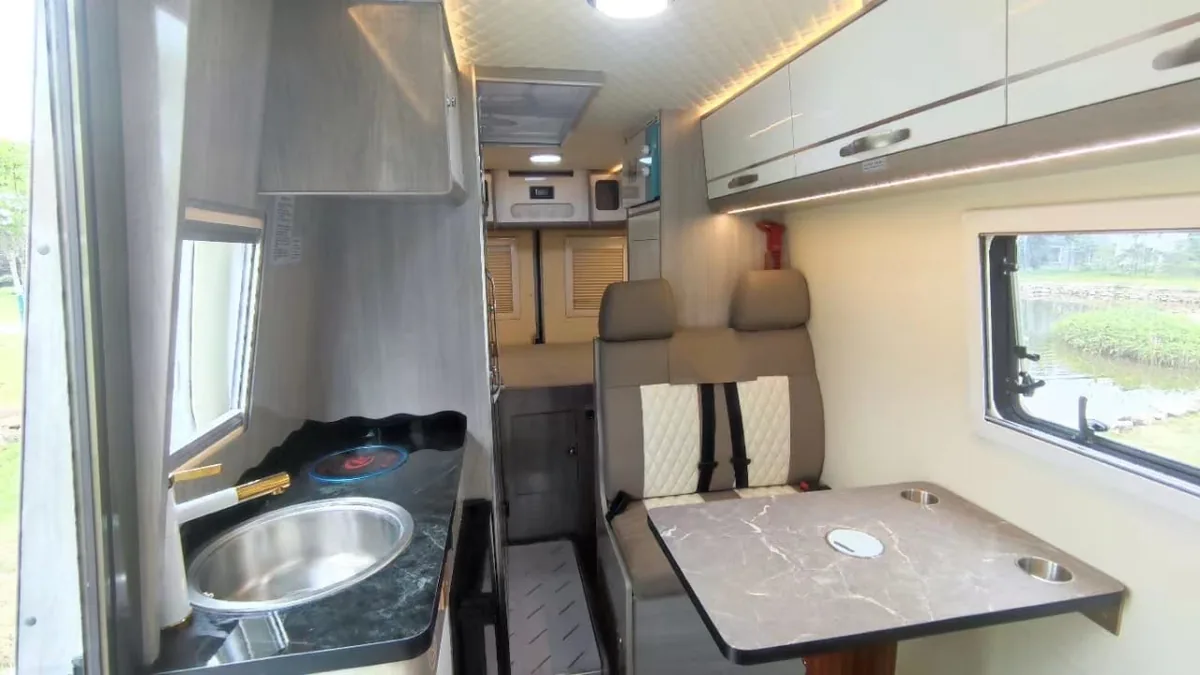
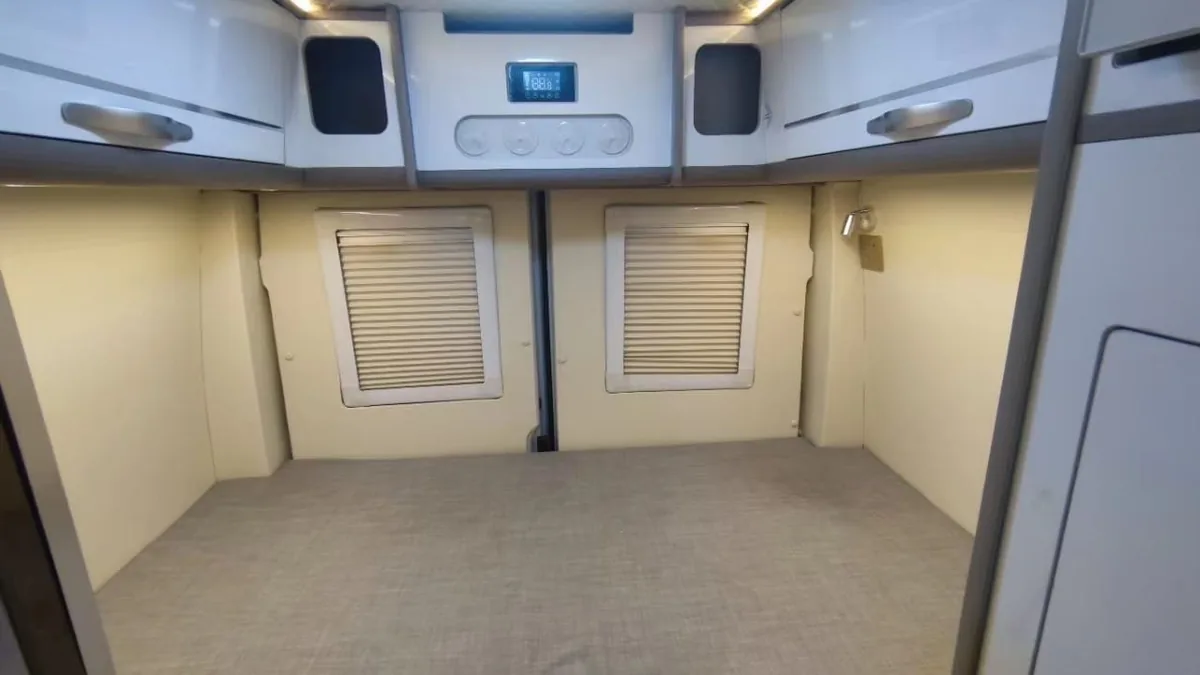
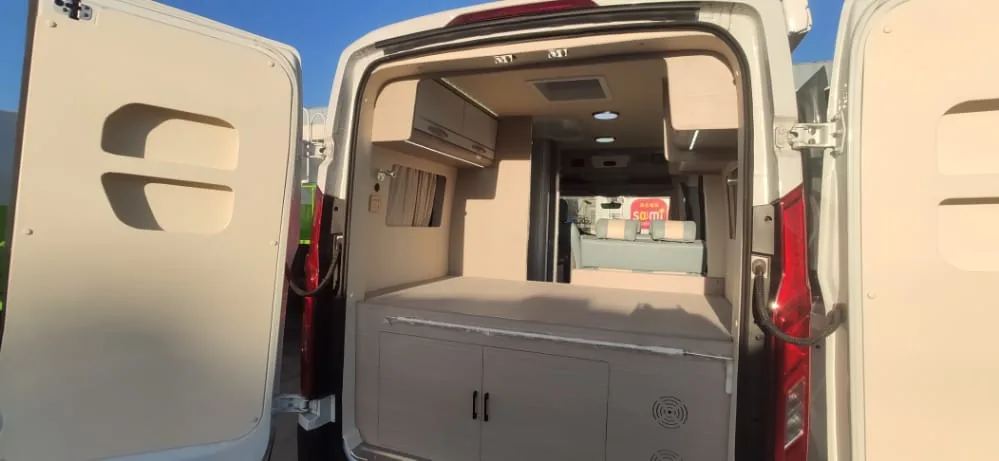
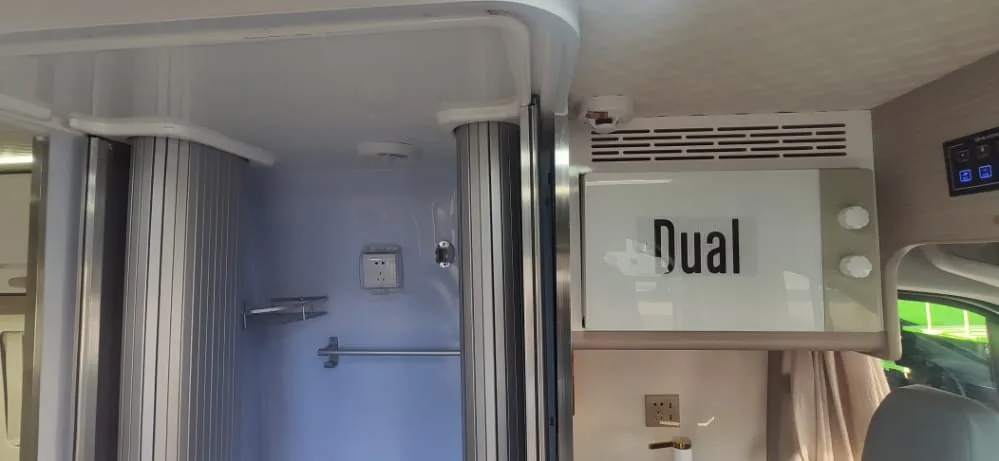
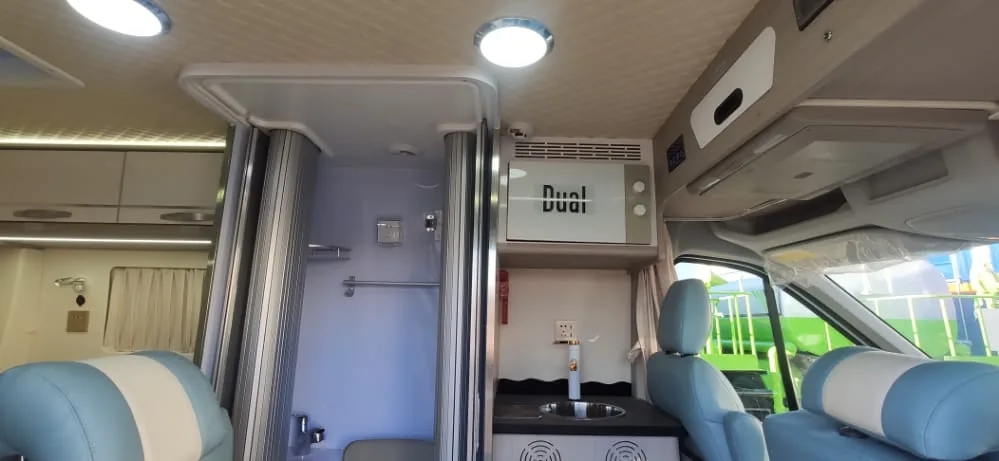
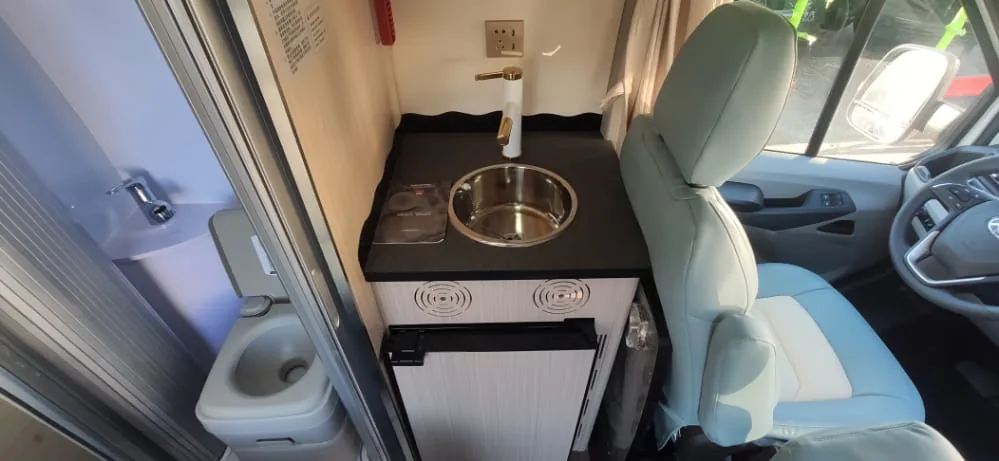
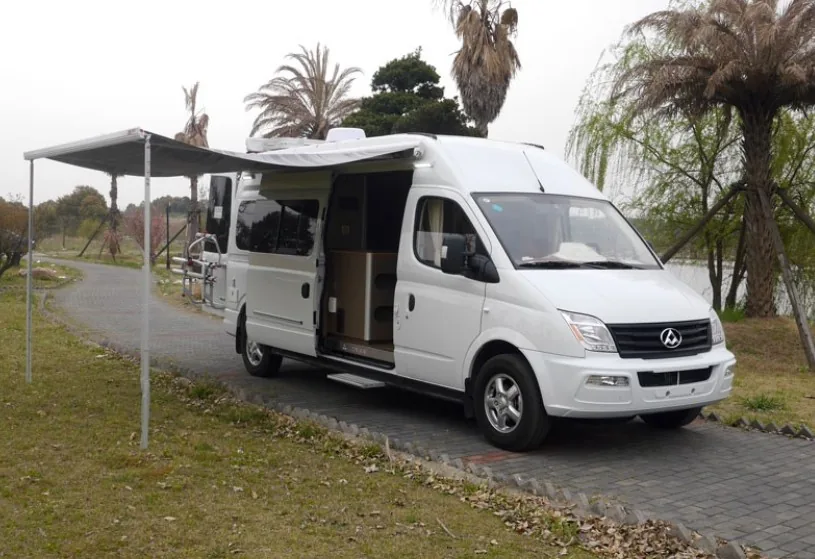
We use interior photos of the Maxus Class B campervan sold by Lebanon Caravans as a real living space to keep in mind while you plan walls, roof, floor and windows.
What Lebanese Winter Actually Demands
Think in two modes, not one average temperature.
Mountain nights (Cedars, Faraya, Dinnieh, high Bekaa). Outside air is cold and relatively dry. Heat loss through the roof, floor and thin metal walls dominates. You need continuous insulation with as few thermal bridges as possible, a warm floor under your feet, and a heater that does not rely on weak winter solar alone. Our winter camping tips cover packing and overnight habits; this page covers the fabric of the van.
Coastal and mid-elevation wet nights. Air is milder but humid. Condensation on glass, metal ribs and uninsulated patches becomes the main enemy: damp mattresses, mould in lockers, and that sour smell in the morning. Insulation still helps, but ventilation and vapour control matter as much as thickness. See campervan ventilation and condensation.
If you are still choosing a vehicle, pair this guide with our winter caravan buying checklist and the Maxus Class B interior tour.
Priorities in Order (Do Not Skip Ahead)
Winter insulation fails when people buy random foam and stick it wherever it fits. Work in this order:
- Seal air leaks (doors, bulkheads, unused holes, cable glands). Moving cold air beats any R-value.
- Sound-deadening / damping on large metal panels so the shell does not radiate cold and boom.
- Continuous insulation on walls and ceiling, filling cavities without crushing soft materials into air gaps.
- Floor insulation under a real subfloor — cold feet ruin more trips than a slightly cool wall.
- Windows, blinds and a cab curtain — glass and the cab are huge heat leaks.
- Heating plan that matches the insulation, plus a carbon monoxide alarm if you use combustion heat.
- Ventilation strategy so moisture has somewhere to go.
Materials details and trade-offs live in the insulation materials guide. For conversion sequence, see how to convert a van into a camper.
Walls and Roof: Continuous Coverage Beats Thick Patches
Metal ribs and window frames are thermal bridges. If you only pad the flat panels and leave ribs bare, those ribs sweat in winter. Aim for:
- A first layer that follows the metal (closed-cell foam or similar) so you break the cold surface.
- A fill layer in the deep cavities (sheep wool, recycled PET, or carefully fitted foam) without leaving empty pockets.
- No compressed soft insulation that creates voids above your head — ceiling gaps are where heat escapes first on a mountain night.
The Maxus living space shows why this matters: you cook, sit and sleep in the same short cabin. Warm air pools at the roof, so a thin or gappy ceiling wastes heater fuel. A solid roof vent with a cover still belongs in the plan; insulation and ventilation are partners, not opposites.
Floor: The Upgrade Owners Feel First
Stand barefoot on a steel floor above snow or wet asphalt and you will understand why floor insulation is priority four, not an optional extra. A winter-ready floor usually means:
- Insulation between chassis and living floor (closed-cell foam or rigid board that does not soak up water).
- A vapour-aware layer so ground moisture does not creep into timber.
- A finished floor you can wipe dry after wet boots from a Faraya car park.
If you buy a finished campervan, ask what is under the vinyl or laminate. If you convert yourself, do the floor before furniture so you are not working around cabinets later.
Windows, Blinds and the Cab Curtain
Glass loses heat fast. Practical winter moves:
- Insulated window covers or reflective screens for overnight (especially on the large sliding-door glass and rear doors).
- Use factory blinds where fitted — they cut radiant loss and give privacy without steaming the whole pane if you still crack a vent.
- A thick cab curtain (or insulated bulkhead) that closes off the windscreen and cab doors. The cab is a giant uninsulated greenhouse at night; closing it off is often the single cheapest comfort upgrade.
In the Maxus layout, blinds on the side windows and a clear separation between cab and living area make overnight camping much easier once the curtain is in place.
Condensation: Insulation Alone Is Not Enough
Cooking pasta, drying wet jackets and breathing all night dump litres of water into a small cabin. On the coast that moisture hits cold glass and ribs; in the mountains it freezes on the inside of poorly insulated corners.
Do this every winter trip:
- Run a roof fan on low or crack a window vent while cooking.
- Keep a small hygrometer visible; if relative humidity stays high, increase airflow before you increase heater output.
- Avoid sealing the van completely “to keep heat in” — that is how mould starts in wardrobes.
- Dry towels outside the sleeping zone when you can.
Bathroom and kitchen zones need wipe-clean surfaces and good airflow precisely because they generate steam. The Maxus wet-room and galley show how compact those zones are — moisture has nowhere far to travel.
Heating and Insulation: They Must Match
Thick walls with no heater still leave you cold at 1,800 m. A diesel heater in a sieve of a van burns fuel all night and still feels drafty.
Good pairing:
- Insulated shell + diesel or gas blown-air heater ducted so air reaches the bed and floor level.
- CO alarm (and smoke alarm) whenever you burn fuel.
- Battery capacity for the heater fan and lights on short winter days — see solar and electrical basics.
Bad pairing:
- Unvented gas heaters or charcoal indoors.
- Relying only on an AC heat pump with no shore power on a mountain night.
- Cranking the heater while every window is sealed shut with no fan.
When you buy from Lebanon Caravans, ask what heating and insulation package comes with the van or conversion, and where exhaust and intake would go if you add a diesel unit. The Class B product page is the place to start the conversation for a ready Maxus-style van motorhome.

Common Mistakes on Lebanese Winter Builds
- Insulating only the walls and leaving the floor thin.
- Leaving the cab open to the living area with no curtain.
- Foil bubble wrap alone as “the insulation” — it helps a little as a radiant layer, not as a full winter package.
- Trapping moisture behind vapour-closed layers with no way out, then blaming the foam when lockers smell.
- Skipping sound deadening, then wondering why the shell feels icy and noisy.
- Buying a heater first and insulating later — you will size fuel and battery wrong.
- Ignoring window covers because “the blinds look nice.”
- No CO alarm with any combustion appliance.
Quick Winter Insulation Checklist
- Air leaks sealed; large panels damped.
- Walls and roof filled continuously; ribs covered.
- Floor insulated under a real subfloor.
- Cab curtain + overnight window covers.
- Roof vent / fan usable in wet and cold weather.
- Heater plan matched to insulation; CO alarm fitted.
- Hygrometer in the cabin; wet gear stored where air moves.
Buy or Convert for Winter with Lebanon Caravans
Whether you want a ready Class B like the Maxus van motorhome or a custom conversion built for Lebanese mountains and coast, Lebanon Caravans in Bekhaoun, Dinnieh, North Lebanon sells motorhomes and caravans, imports models to order and converts vans for local roads and seasons. Sit inside, ask about insulation thickness, window covers, cab curtains and heater options before you pay the deposit.
See vans and conversions at www.lebanoncaravans.com · Maxus Class B: product page
- Website and full catalogue: www.lebanoncaravans.com
- Blog: blog.lebanoncaravans.com
- Camping gear and accessories: store.sayahlan.com
- Trip planning app: app.sayahlan.com
WhatsApp:
+961 78 880 003
Final Thoughts
Winter comfort in a Lebanese van is a system: seal, damp, insulate walls and roof, warm the floor, tame the glass and cab, then heat and ventilate on purpose. Do that and nights under the Cedars or on a damp coastal pull-off stay dry and usable. Skip the order, and no amount of heater fuel will feel like enough.
Gear we recommend
As an Amazon Associate we earn from qualifying purchases. Learn more.
- Closed cell foam insulation sheets on Amazon
- Sheep wool insulation van on Amazon
- Sound deadening mat car on Amazon
- Reflective window insulation cover van on Amazon
- Diesel air heater 2kW 12V on Amazon
- Carbon monoxide alarm RV on Amazon
- Hygrometer digital indoor on Amazon
- 12V roof vent fan RV on Amazon