Winter Caravans: What to Look For When Buying
A practical buyer's guide to choosing a caravan for cold, wet Lebanese winters: insulation, windows, heating, water, power, chassis and layout, with real interior photos of the RCFS off-road caravan.
Most caravans look great on a sunny showroom yard. Winter is where the differences show. When the temperature drops in the Cedars, Faraya or the Dinnieh hills, a poorly built caravan turns into a cold, damp box with frozen pipes and wet bedding. A well chosen one becomes a warm mountain cabin you can tow anywhere.
This guide is for buyers. We have already written about how to camp in winter; here the question is different: what should you check before you buy a caravan you plan to use in the cold months? We use a real model sold by Lebanon Caravans, the RCFS off-road caravan, as a worked example, with photos from its gallery.
1. Insulation and Construction
Heat leaves a caravan through walls, floor and roof. Ask the seller:
- What are the walls made of? Composite sandwich panels with foam cores insulate far better than thin aluminium skins over a timber frame, and they do not rot when moisture gets in.
- How thick are the floor and roof? Cold floors are the number one winter complaint. A thicker insulated floor makes a big difference.
- Are there cold bridges? Look at door frames, lockers and window frames from inside. Condensation lines there tell you where heat escapes.
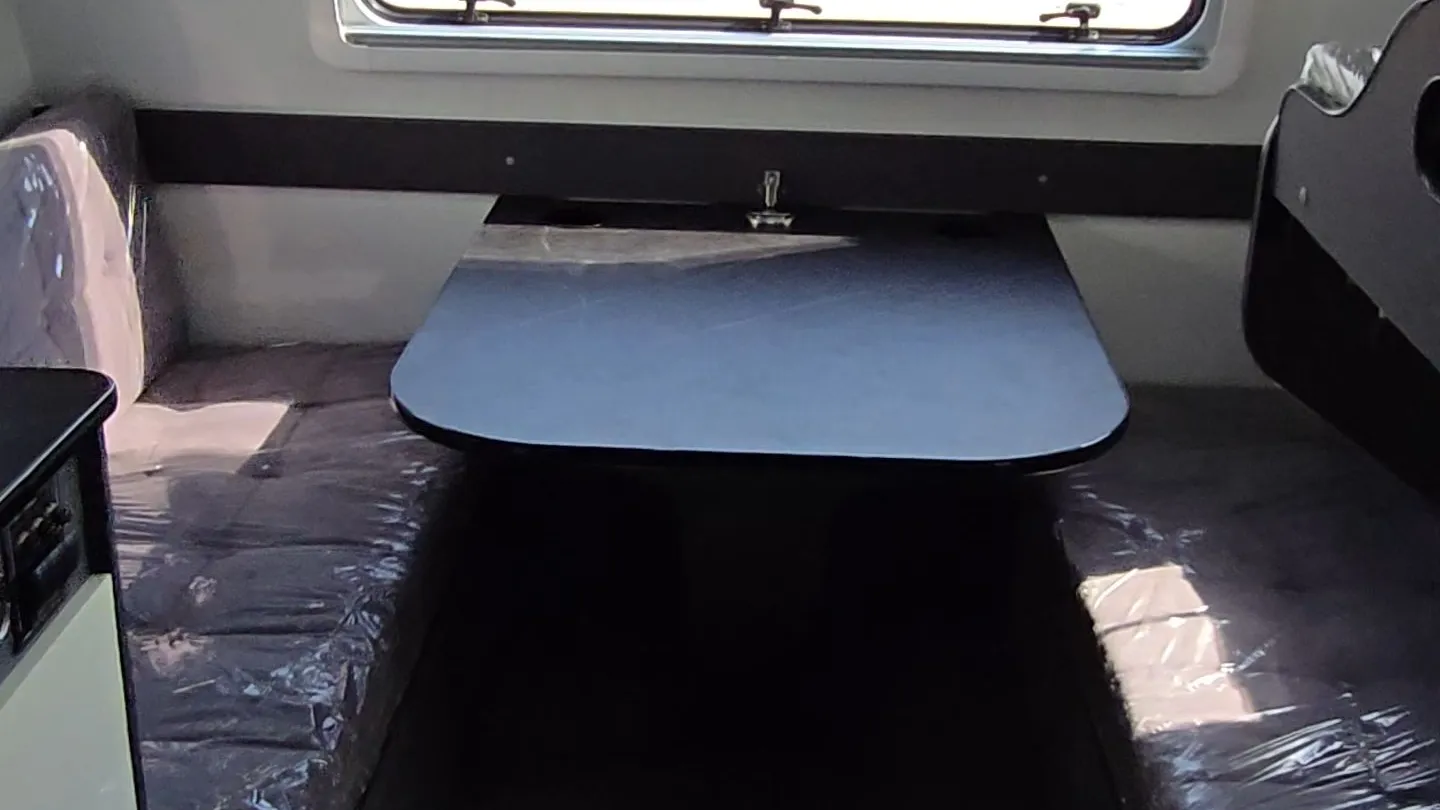
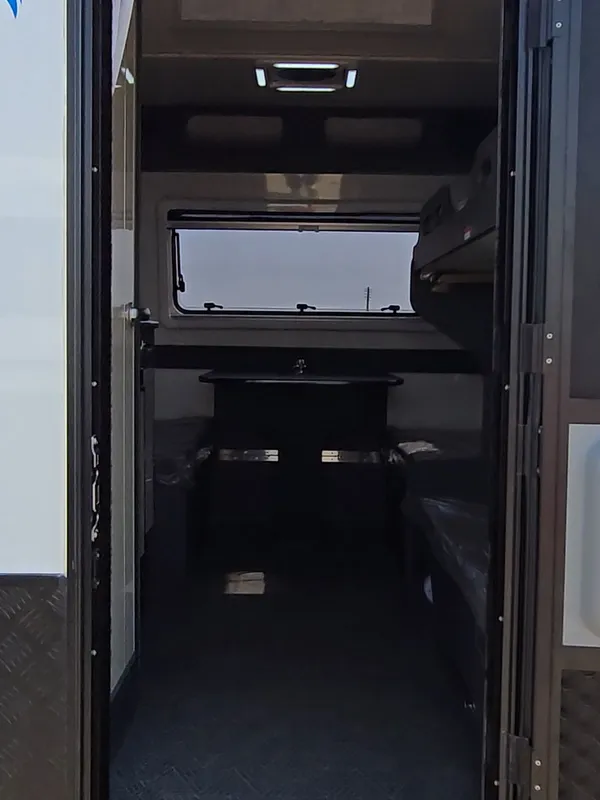
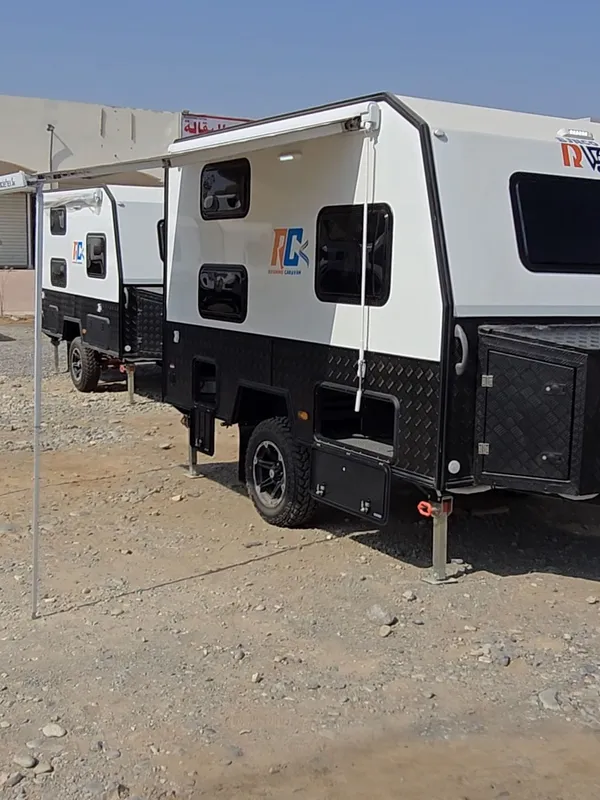
The RCFS has smooth composite-style walls, a solid entrance door with its own window, and black chequer-plate protection around the lower body and lockers, which helps against stones, mud and road salt on winter roads.
2. Windows, Skylights and Blinds
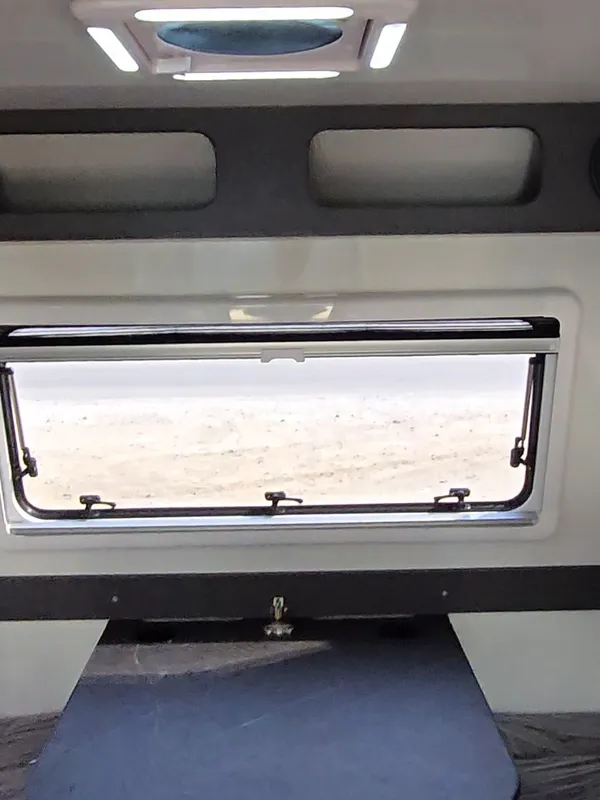
Double-glazed acrylic windows with built-in blinds and fly screens are the standard you want. Single glazing will drip all night in winter. In the RCFS gallery the windows are framed acrylic units with integrated blinds, and there is a roof light over the living area. Open and close each one, check the seals, and make sure you can ventilate without opening wide: winter living needs a little fresh air to fight condensation (see our ventilation and condensation guide).
3. Heating: Ask What Is Installed, Not What Is Possible
Ask exactly which heater is fitted and how it is powered. The options:
- Diesel or gas blown-air heater. The best choice for off-grid winter nights. It draws little electricity and heats the cabin quickly.
- Air conditioner with a heat mode. Comfortable and quiet, but it needs mains power (a campsite hookup or a generator); solar alone will not run it through a winter night.
- Electric heaters. Only on mains power, and only with good circuit protection.
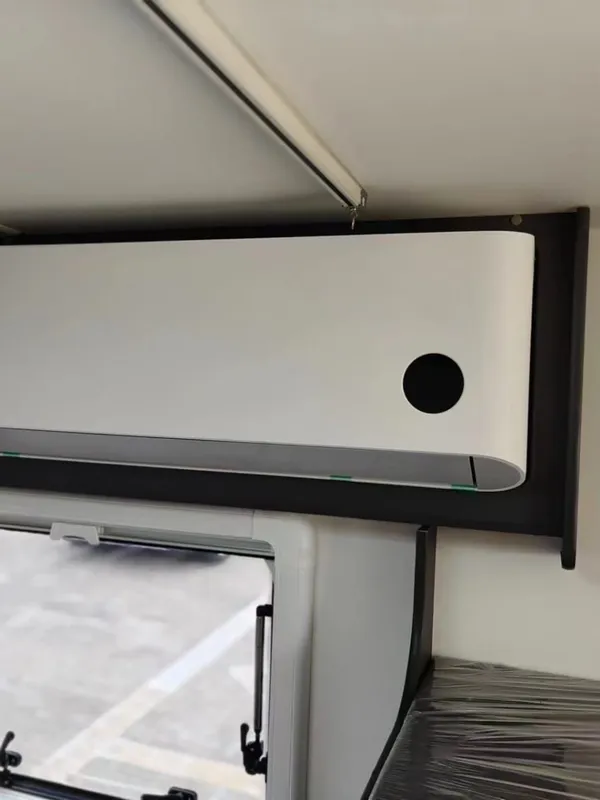
The RCFS gallery shows a wall-mounted air conditioner above the lounge. If you plan to camp off-grid in snow, ask the team about adding a diesel heater to your order and where its exhaust and fuel line would go. Never use an unvented gas heater or a barbecue inside a closed caravan, and always fit a carbon monoxide alarm.
4. Water That Will Not Freeze
Frozen water is the classic winter problem. Check:
- Where the tanks are. Inboard tanks stay warmer than tanks hung under the chassis.
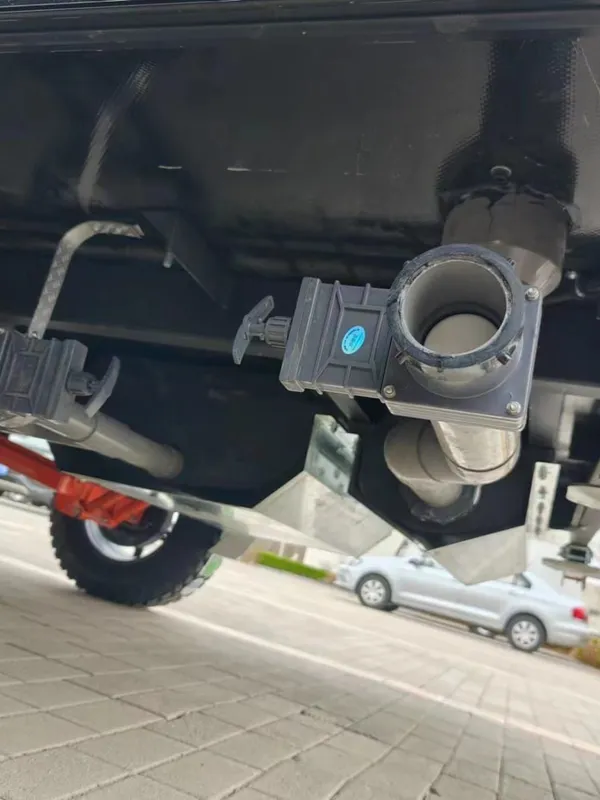
- How you drain the system. You need an easy, reachable drain point so you can empty pipes and tanks before a freezing night.
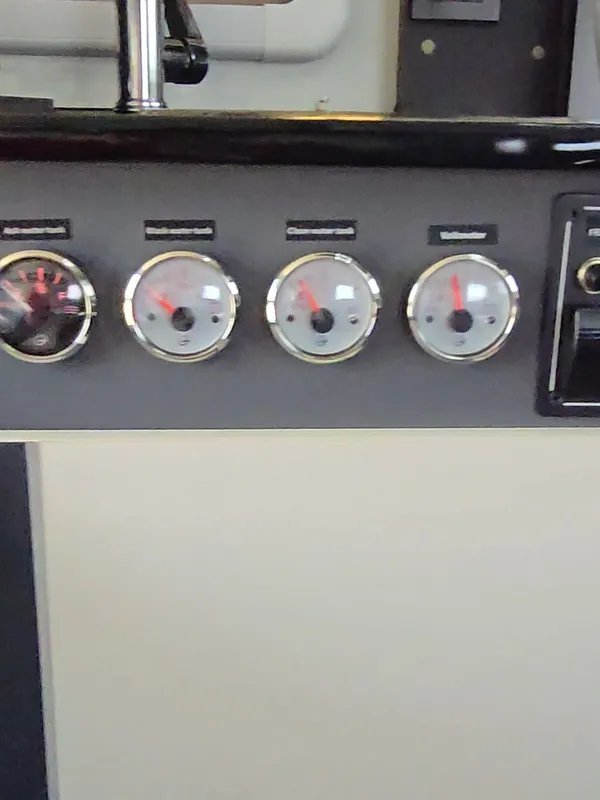
- Tank gauges. A panel that shows fresh and waste levels saves you from surprises.
The RCFS has a control panel with tank gauges next to the kitchen and a clearly marked drain point under the body. Ask to see it in action. Our water system guide explains pumps, tanks and winterising in more detail.
5. Power for Short Winter Days
Solar output drops in winter, while lights, fans, the heater fan and the fridge keep working. Ask for the battery capacity (Ah or kWh), the solar wattage and whether there is a charger from the tow car and from mains. A lithium battery with built-in low-temperature protection is ideal. Our solar and electrical basics will help you compare offers.
6. Kitchen and Gas in the Cold
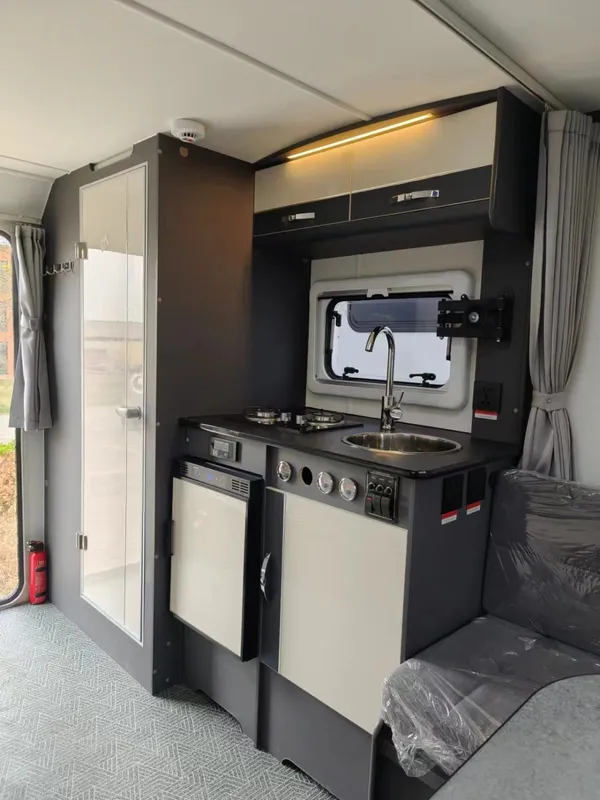
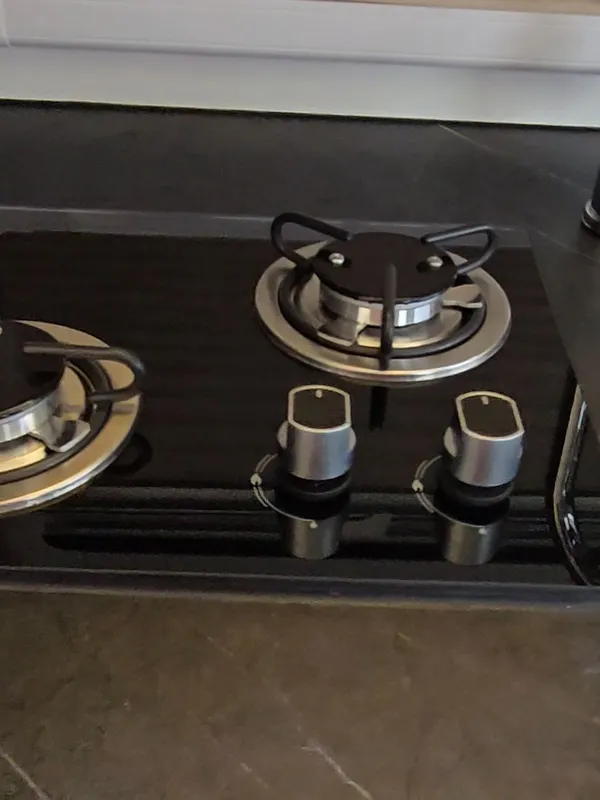
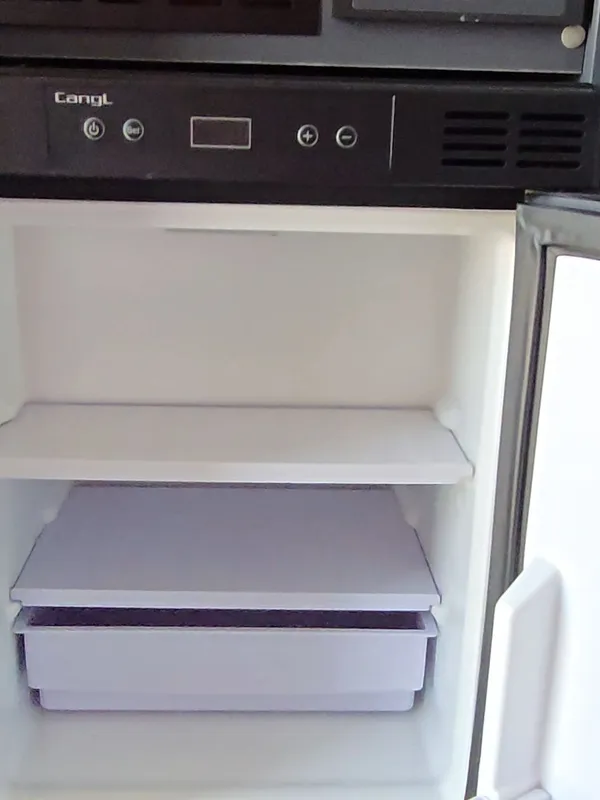
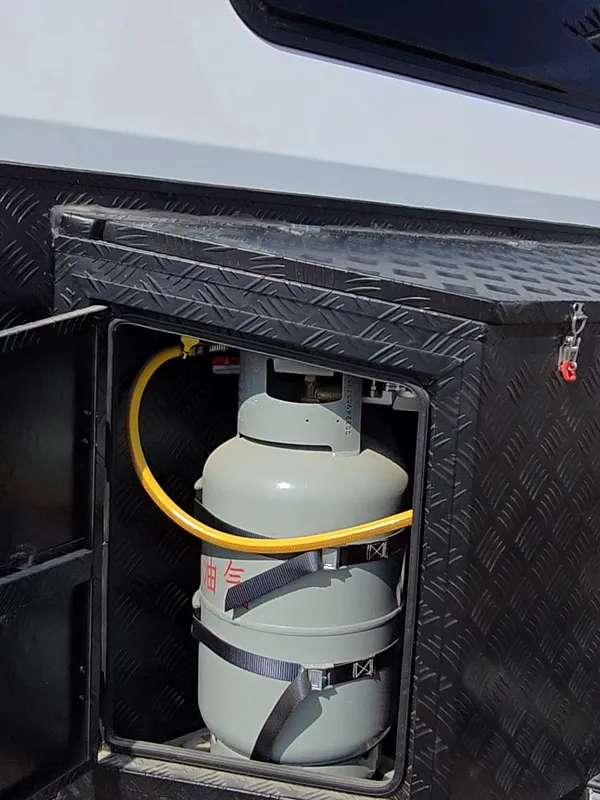
Propane works better than butane in cold weather, so ask which gas the system is set up for. The bottle should sit in a sealed outside locker with a drop vent. In the RCFS, the gas bottle lives in an outside chequer-plate locker, and the kitchen has a gas hob with a glass lid, a sink and a fridge, so hot meals and drinks are easy on a cold evening.
7. Chassis, Tyres and Ground Clearance
Winter in the Lebanese mountains means mud, gravel, rain and sometimes snow. A trailer with higher ground clearance, off-road suspension and all-terrain tyres copes much better with unpaved camp spots. Check the hitch (an off-road coupling is a plus), jockey wheel, corner steadies, brakes and lights. Read our first-time towing guide and mountain roads for caravans before your first winter trip.
8. A Layout for Long Evenings
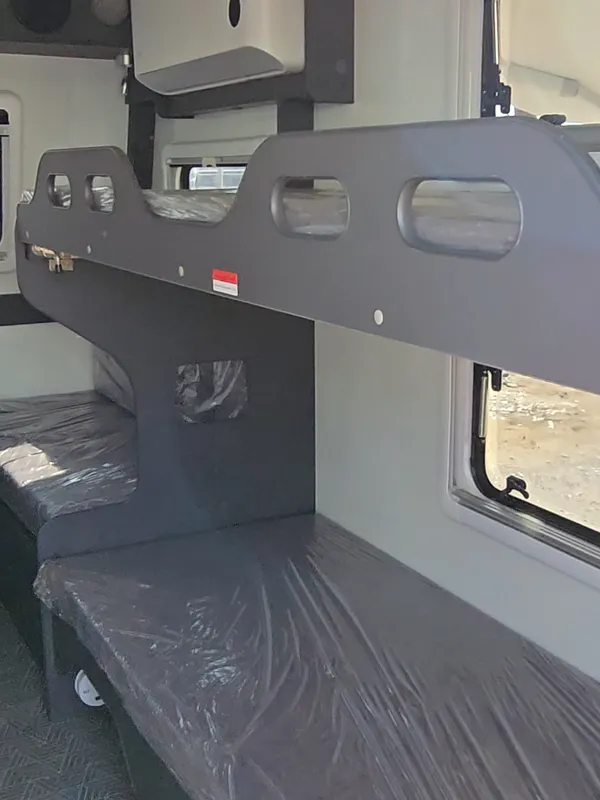
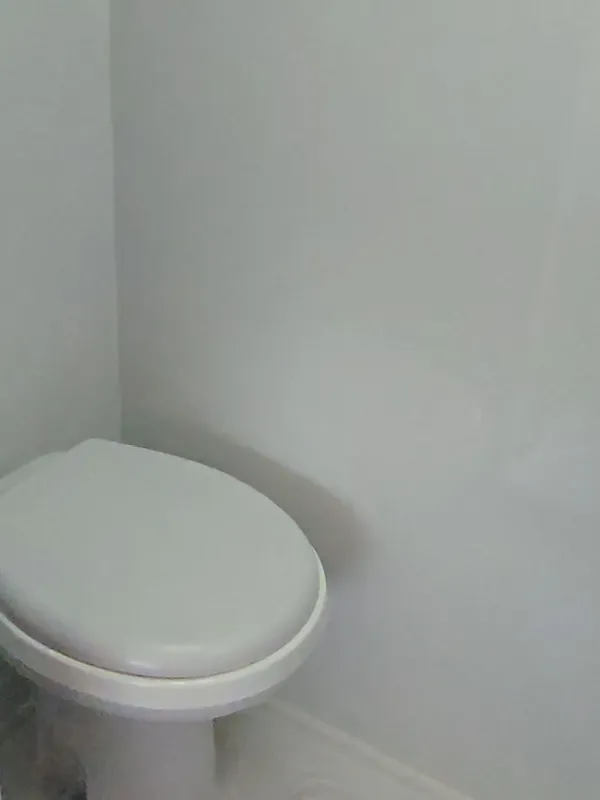
Winter nights are long, and you will spend more time inside. Look for a dinette where everyone can sit at once, beds that do not need to be made up every evening, and a bathroom you can use without going outside. The RCFS seats 7 and sleeps 4: bunk beds plus a sofa and table that convert into a double, with a bathroom and kitchen. Compare layouts with our bed layout guide.
RCFS Off-Road Caravan: Key Facts
According to the product page on lebanoncaravans.com (prices and times can change, so please check the page):
| RCFS (imported) | BIJANCO RCSS (local build) | |
|---|---|---|
| Size | 4.50 x 2.25 x 2.00 m | 4.50 x 2.25 x 2.00 m |
| Sleeps / seats | 4 / 7 | 4 / 7 |
| Beds | Bunk beds + sofa-to-double | Bunk beds + sofa-to-double |
| Facilities | Bathroom, kitchen, storage | Bathroom, kitchen, storage |
| Price shown | about $28,500 | about $18,500 |
| Delivery | 90 working days | 30-60 working days |
The local BIJANCO RCSS does not look exactly like the imported model, but it has similar contents. If you need more beds, see the larger RCXL FS off-road caravan.
Quick Winter Buying Checklist
- Insulated walls, floor and roof, with no damp marks.
- Double-glazed windows with blinds, plus a roof vent.
- A real heater fitted, and a CO alarm.
- Easy drain points and tank gauges.
- Enough battery and a charger from car and mains.
- Propane, in an outside locker.
- Solid chassis, good tyres and clearance.
- A layout that works when everyone is inside.
Our buying checklist works for new units too, and the maintenance schedule tells you what to check every autumn.
Buy a Winter-Ready Caravan in Lebanon
Lebanon Caravans, based in Bekhaoun, Dinnieh, North Lebanon, sells caravans and motorhomes, imports models to order and converts vans for Lebanese roads and seasons. See all the photos on the RCFS product page, then visit the showroom, sit inside and ask the team about heating and winter options before you decide.
See the caravans at www.lebanoncaravans.com
- Website and full catalogue: www.lebanoncaravans.com
- Blog: blog.lebanoncaravans.com
- Camping gear and accessories: store.sayahlan.com
- Trip planning app: app.sayahlan.com
WhatsApp:
+961 78 880 003
Final Thoughts
A winter caravan is not about one feature, it is about the whole package: insulation, glazing, heating, water you can drain, power that lasts and a chassis that copes with mountain roads. Check each point on the yard, and you will buy a caravan that is as good in January as it is in July.
Gear we recommend
As an Amazon Associate we earn from qualifying purchases. Learn more.
- Diesel air heater for caravan on Amazon
- Carbon monoxide alarm for RV on Amazon
- RV antifreeze on Amazon
- Heated water hose for RV on Amazon