Campervan Ventilation and Condensation: How to Keep Your Van Dry
Why condensation forms in campervans and how to prevent it with roof fans, airflow, insulation, heating choices and daily habits, plus how to deal with mould.
Wake up in a campervan on a cool morning and you may find water running down the windows, damp bedding and drips from the ceiling. Condensation is one of the most common problems in small living spaces on wheels. Left unchecked, it leads to mould, musty smells, rust and damage to wood and insulation.
The good news is that condensation can be managed well with the right combination of ventilation, insulation, heating and habits. This guide explains why it happens and what you can do about it.
Why Condensation Happens
Air always holds some water vapour. Warm air can hold more water than cold air. When warm, moist air touches a cold surface, it cools down and can no longer hold all its moisture, so water forms on the surface as droplets. That is condensation.
In a campervan, several things combine to make this especially likely:
- A small air volume, so moisture builds up quickly.
- People breathing, which releases moisture all night.
- Cooking, especially boiling water.
- Wet clothes, towels and gear drying inside.
- Cold metal surfaces such as the van body, windows and uninsulated parts.
- Some heating types, especially unvented gas heaters, which add water vapour to the air.
Step 1: Ventilation
Ventilation is the most effective tool against condensation. It replaces moist air inside with drier air from outside.
Roof Fans
A powered roof fan is one of the best upgrades for any campervan. It can extract moist air while you cook, sleep or after a shower. Many fans can run in both directions, pulling air in or pushing it out. Look for:
- Variable speeds so you can run it quietly at night.
- A rain cover so it can run in wet weather.
- Insect mesh.
- Low power consumption, which is important off-grid. See our electrical and solar basics.
Cross-Ventilation
A fan works best when it has a source of fresh air. Crack open a window or a vent at the opposite end of the van so air flows across the living space. Window vents or rain guards let you keep windows slightly open in light rain.
Passive Vents
Passive vents in the roof or floor allow a small, constant air exchange without power. They help but are usually not enough on their own in cold, damp conditions.
Ventilating Hidden Spaces
Condensation often forms where air does not move: behind cushions, under mattresses and inside cupboards against outside walls. Leave small gaps behind furniture, use slatted bed bases or breathable underlays, and open cupboards occasionally.
Step 2: Insulation and Thermal Breaks
Insulation does not remove moisture, but it keeps inner surfaces warmer, so less condensation forms on them. A well-insulated van has far fewer cold spots.
Key points:
- Cover as much bare metal as possible, including ribs and pillars.
- Consider the vapour control approach suitable for your insulation materials.
- Avoid gaps in insulation that create cold spots where moisture collects.
- Insulate or cover windows at night with insulated screens.
Our detailed campervan insulation guide explains materials and methods.
Step 3: Choose the Right Heating
Heating choice has a big effect on condensation:
- Diesel or gas heaters with external exhaust (room-sealed) take combustion air from outside and vent fumes outside. They produce dry heat inside.
- Unvented portable gas heaters release combustion products, including water vapour, into the van. They also bring serious safety risks from carbon monoxide and lack of oxygen. They are not recommended for use inside sleeping areas.
- Electric heaters on hook-up add no moisture.
Always fit a working carbon monoxide alarm. For more on safe heating, read our winter camping tips.
Step 4: Reduce Moisture at the Source
Cooking
- Use lids on pans.
- Run the roof fan on extract while cooking.
- Cook outside when weather allows.
- Avoid long boiling sessions inside in cold weather.
Wet Gear
- Dry clothes and towels outside whenever possible.
- Store wet gear in a sealed box or bag until it can be dried.
- Use laundry facilities with dryers on longer trips.
Showering
Showering inside a van adds a lot of moisture. Run the fan during and after, and wipe surfaces. Many vanlifers prefer outdoor or campsite showers in cold weather.
Step 5: Daily Habits
- Air the van every morning. Open doors and windows for a few minutes, even in cold weather.
- Wipe windows with a microfibre cloth or a window vacuum and empty the water outside.
- Lift the mattress periodically to let it breathe.
- Do not seal the van completely at night; keep a small vent open.
- Use a hygrometer to watch humidity levels and see the effect of your changes.
Dehumidifiers
- Desiccant moisture absorbers (crystal tubs or bags) help in cupboards and when the van is stored, but have limited capacity in an occupied van.
- Electric dehumidifiers work well on hook-up but use significant power, so they are less practical off-grid.
Dealing With Mould
If mould appears:
- Ventilate well while cleaning.
- Clean hard surfaces with a suitable mould cleaner, following product instructions.
- Dry the area thoroughly.
- Find and fix the cause: a cold spot, a leak or poor airflow.
Persistent mould behind panels may indicate a water leak rather than condensation. Check seals around windows, roof vents and fittings. Leaks are a common problem in older vehicles; our used caravan checklist explains how to spot damp.
Ventilation in Hot Climates
In hot weather, ventilation is also about comfort. Running a roof fan with windows open on the shaded side pulls cooler air through the van. Our guide to staying cool in a campervan goes into detail. In humid coastal areas, condensation can also appear on cold surfaces such as the fridge or air-conditioned areas.
Pop-Tops and Small Spaces
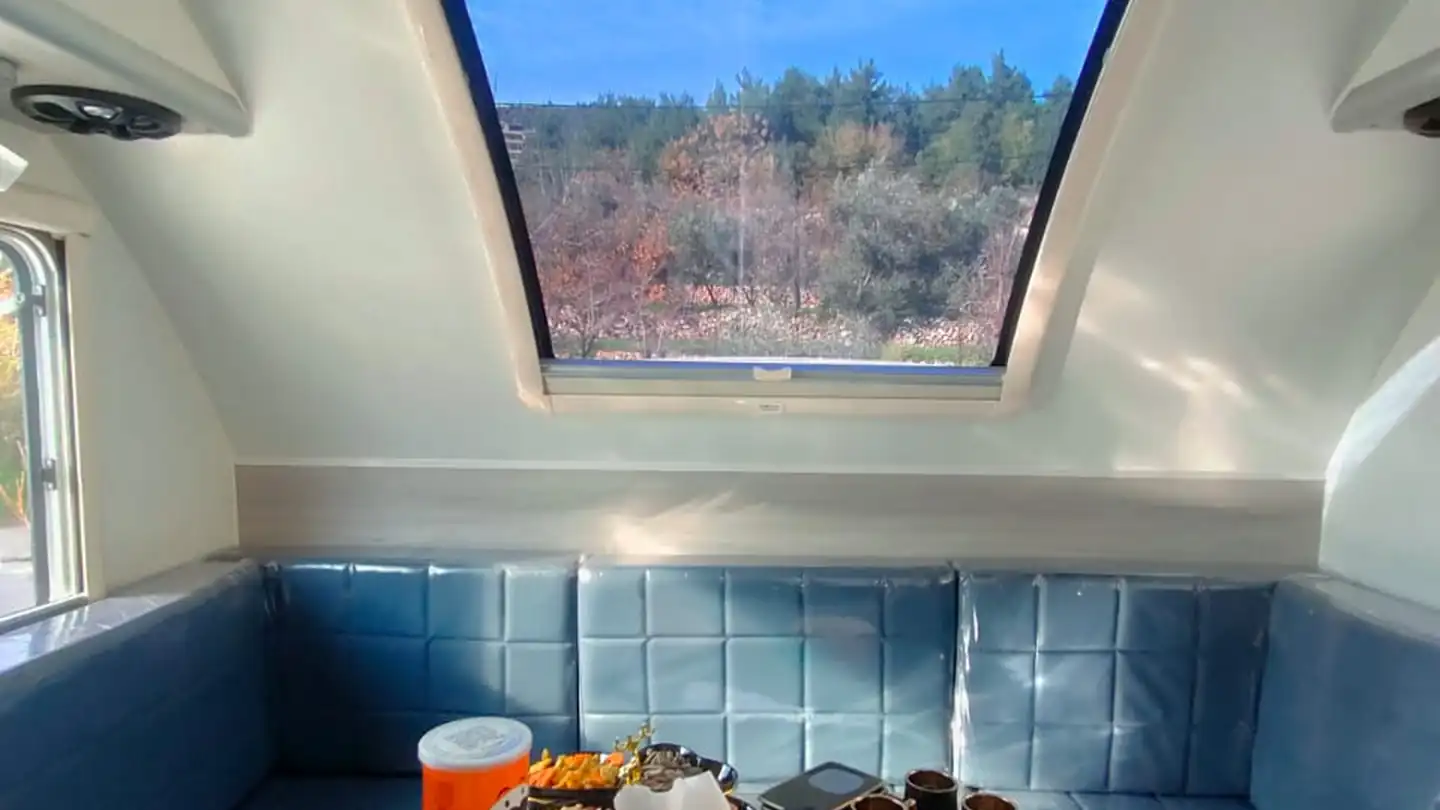
Canvas pop-tops and small trailers have their own challenges. Canvas can become damp on the inside in cold weather and must be dried before storage. Small spaces like teardrop cabins fill with moisture quickly overnight, so roof vents and opening windows are essential. See pop-top vs high-roof for more.
Quick Checklist
- Roof fan fitted and used daily.
- Cross-ventilation from a second opening.
- Good insulation with few cold spots.
- Room-sealed heater, not an unvented one.
- Carbon monoxide alarm installed.
- Wet gear kept or dried outside.
- Mattress allowed to breathe.
- Windows wiped each morning when needed.
Ventilation While Driving and in Storage
Moisture management does not stop when you are on the move or parked at home. While driving, open a roof vent slightly or use the cab ventilation on fresh air rather than recirculation to clear moisture from the night. When the van is stored, leave passive vents open, prop cupboard doors and the fridge open, and remove damp textiles. A van left sealed for weeks with damp bedding inside is a common cause of mould.
Final Thoughts
Condensation is normal in any small, occupied space, but it does not have to be a problem. Move the moist air out, keep surfaces warmer and avoid adding unnecessary moisture. If you plan these steps into your build from the start, as described in how to convert a van into a camper, your van will stay drier, healthier and last longer.
Gear we recommend
As an Amazon Associate we earn from qualifying purchases. Learn more.
- MaxxAir roof vent fan on Amazon
- 12V roof vent fan RV on Amazon
- Dehumidifier small rechargeable on Amazon
- Hygrometer digital indoor on Amazon