Choosing a Campervan Bed Layout: Fixed, Convertible, Sideways and More
Compare campervan bed layouts, including fixed rear beds, sideways beds, rock-and-roll seats, dinette conversions, lift beds and roof beds, to find what suits your van and lifestyle.
The bed is the largest single item in most campervans, and its layout shapes everything else: where the kitchen goes, how much storage you have, whether you can sit comfortably inside and how easy it is to go to sleep at the end of a long day. Choosing the right bed layout early in your build saves a lot of redesign later.
This guide compares the most common campervan bed layouts, with their advantages, drawbacks and the kinds of travellers they suit.
Questions to Ask First
Before looking at layouts, answer these honestly:
- How tall are you? This decides whether a sideways bed is possible.
- How many people sleep in the van? Solo, couple, family?
- How long are your trips? Weekends, weeks or full-time?
- Do you need to work or sit inside a lot? See our guide on working remotely from a van.
- How much gear do you carry? Bikes, surfboards, diving equipment?
- How do you feel about making the bed every day?
Your answers point quickly to one or two layouts.
Layout 1: Fixed Rear Bed (Lengthways or Sideways)
A permanent bed across or along the back of the van, raised high enough for storage underneath, often accessed from the rear doors.
Advantages:
- Always ready; no setup at night.
- Large "garage" storage underneath for bikes, boxes and water tanks.
- Comfortable mattress, as it does not need to fold.
Drawbacks:
- Uses a large part of the floor space permanently.
- Raised bed may limit headroom when sitting in it, especially in low vans.
- Less daytime living space unless you add a separate seating area.
Best for: long trips, full-time living and anyone who values comfort and storage over flexible space.
Sideways (East-West) Fixed Bed
In wider vans, a bed across the van saves length. Check the internal width at mattress height against your height plus some extra for comfort. Some builders fit side flares to gain width. Our guide to the best vans for camper conversion mentions width considerations.
Lengthways (North-South) Fixed Bed
A lengthways bed suits taller people or narrower vans. It uses more length but may leave an aisle alongside. Two single beds lengthways are also an option, sometimes converting to one large bed.
Layout 2: Rock-and-Roll Bed
A rock-and-roll bed is a bench seat that slides and folds flat into a bed. Many are designed and tested as passenger seats with seatbelts, which is essential if people will travel in them.
Advantages:
- Seats for passengers while driving.
- Converts quickly into a bed.
- Leaves floor space for daytime living.
Drawbacks:
- Mattress quality is limited by the seat cushions.
- Must be converted every night and morning.
- Only use seats that are properly tested and installed for passenger use, following local regulations.
Best for: compact and pop-top vans, families and weekend trips. See our pop-top vs high-roof comparison.
Layout 3: Dinette Conversion
Two bench seats face each other with a table between. At night, the table drops down and the cushions rearrange to form a bed.
Advantages:
- Excellent daytime seating and dining space.
- Benches provide storage underneath.
- Good for working and hosting guests.
Drawbacks:
- Cushion puzzles can be fiddly.
- Joins between cushions can be uncomfortable.
- Must be made up every night.
Best for: those who spend lots of time sitting inside, such as remote workers or anyone travelling in cold or rainy seasons.
Layout 4: Lift Bed or Drop-Down Bed
A bed raised to the ceiling during the day and lowered at night, either electrically or manually, sometimes over a seating area.
Advantages:
- Bed and living space in the same footprint.
- Bed stays made up when raised.
Drawbacks:
- Requires good headroom; usually only practical in high-roof vans.
- Mechanisms add weight, cost and complexity.
- Must be installed securely, ideally by experienced builders.
Best for: high-roof vans where space is at a premium and people want a permanent-feeling bed and a lounge.
Layout 5: Roof Bed (Pop-Top)
In pop-top vans, a bed in the raised roof provides extra sleeping space.
Advantages:
- Adds sleeping capacity without using floor space.
- Bedding can often stay in place when the roof is lowered.
Drawbacks:
- Colder in winter and warmer in strong sun.
- Limited space for larger adults.
- Climbing up and down can be awkward.
Best for: families or couples with children in compact vans.
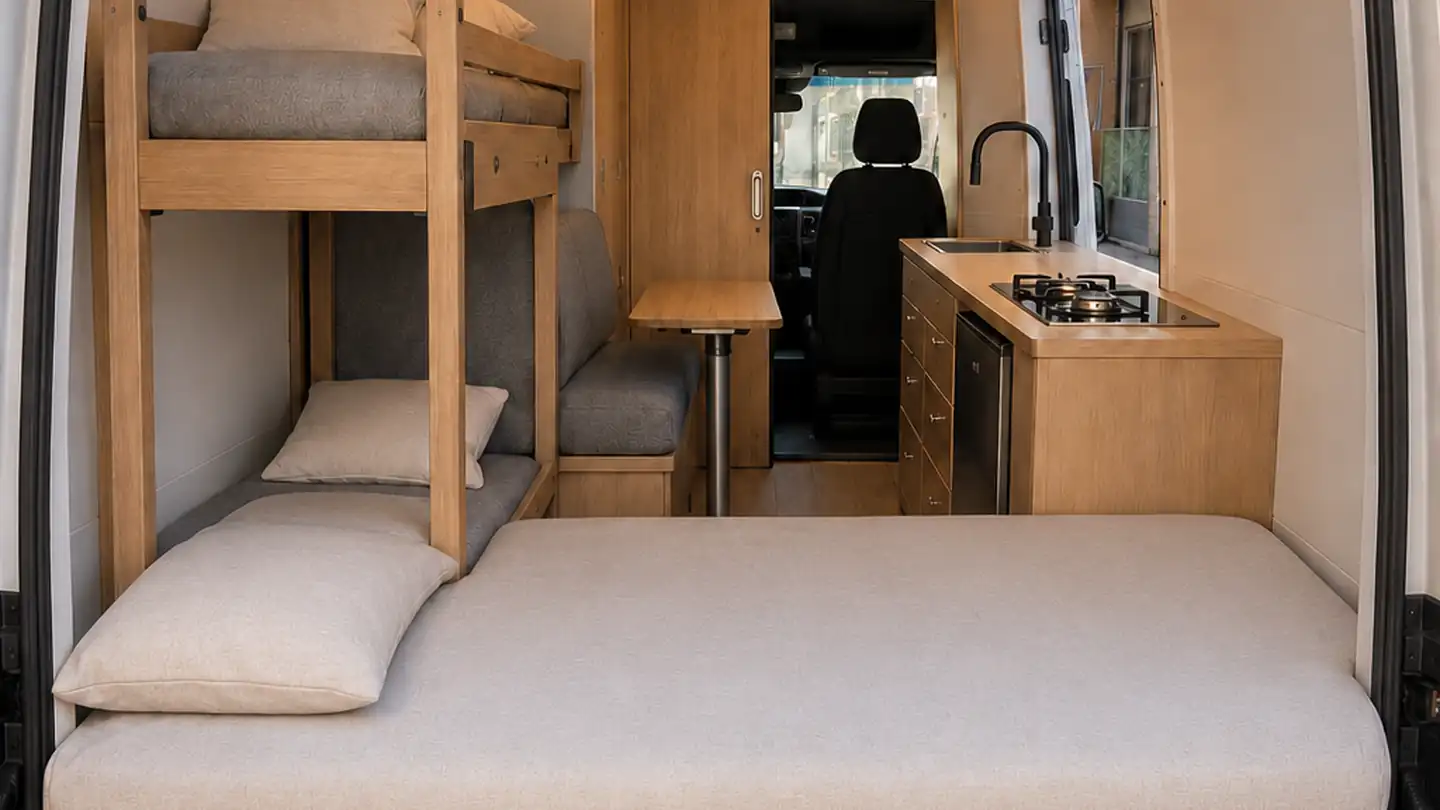
Layout 6: Bunk Beds
Some larger vans and caravans use bunk beds, often across the rear.
Advantages:
- Sleeps more people in a small footprint.
- Children often love them.
Drawbacks:
- Limited headroom on each level.
- Upper bunk needs safety rails.
Best for: families.
Mattress Choices
Whatever the layout, mattress quality makes a huge difference.
- Foam mattresses are common and can be cut to shape; consider density and firmness.
- Pocket sprung or hybrid mattresses offer comfort in fixed beds but are heavier.
- Toppers can transform a firm convertible bed.
Under the mattress, use a breathable base such as slats or an anti-condensation mat to prevent moisture build-up. Our guide to ventilation and condensation explains why.
Storage Around the Bed
- Under-bed garages for bulky gear.
- Overhead lockers above the bed.
- Side pockets or nets for phones, books and glasses.
- Drawers under benches.
Keep heavy items low and near the axles for safe handling.
Comparing Layouts at a Glance
| Layout | Setup each night | Daytime space | Storage | Comfort |
|---|---|---|---|---|
| Fixed rear bed | None | Low | High | High |
| Rock-and-roll | Some | High | Medium | Medium |
| Dinette | Some | High | Medium | Medium |
| Lift bed | Low | High | Medium | High |
| Roof bed | Low | High | Low | Medium |
| Bunks | None | Medium | Medium | Medium |
Test Before You Build
Before committing, mark the layout on the floor of your van with tape. Lie down on the floor where the bed would go, sit where the seats would be and imagine cooking. Even better, rent a few vans with different layouts for short trips. Our guide on renting vs buying a campervan explains how renting can help you decide.
Thinking About the Rest of the Layout
The bed decision affects everything else. A fixed rear bed usually means the kitchen runs along one side near the sliding door, with seating behind the cab using swivel front seats. A dinette or rock-and-roll layout often frees the rear for a kitchen or wet room. Sketch several complete layouts and think about everyday movements: where you will put your shoes, how you get to the fridge when the bed is made up, and whether you can reach the toilet at night without climbing over someone.
Our step-by-step guide on how to convert a van into a camper explains how to plan these elements together.
Final Thoughts
There is no perfect bed layout, only the one that best fits your body, your van and your travel style. If you value comfort and storage, choose a fixed bed. If you need daytime space and seating, choose a convertible layout. Spend time testing before you build; you will be sleeping in that bed for a long time.
Gear we recommend
As an Amazon Associate we earn from qualifying purchases. Learn more.
- Foam mattress topper 4 inch on Amazon
- Folding RV mattress on Amazon
- Under bed storage organizer on Amazon
- Blackout curtains magnetic van on Amazon