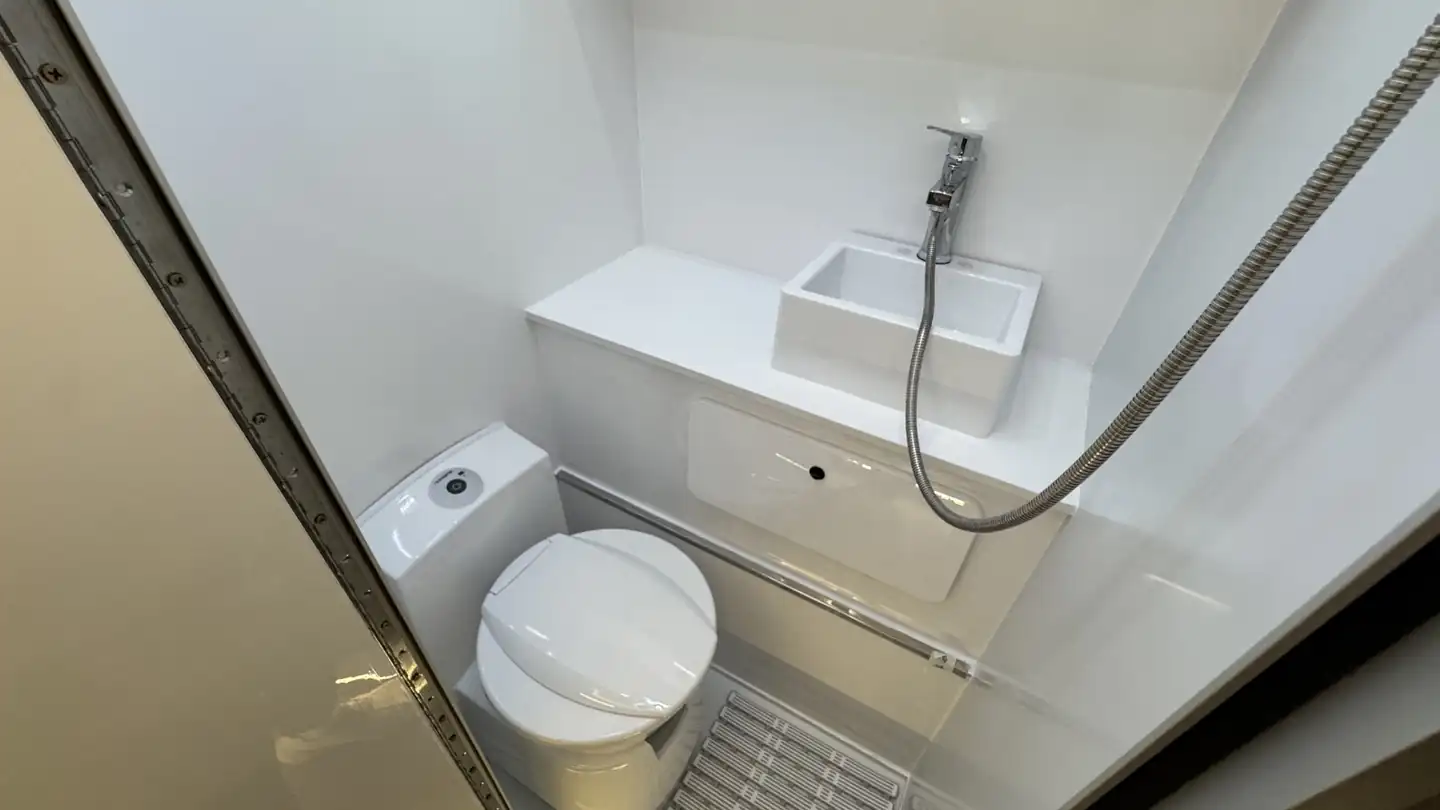
Campervan Toilets Compared: Cassette, Composting, Portable and More
Compare campervan and caravan toilet options, including cassette, portable chemical, composting, bucket systems and going without, with pros, cons, emptying and odour control.
Nobody dreams about the toilet when they imagine life in a campervan, but it is one of the most important practical decisions you will make. The right toilet can give you freedom to camp off-grid, cope with late nights and travel comfortably in areas with few public facilities. The wrong choice can lead to bad smells, difficult emptying and wasted space.
This guide compares the main campervan toilet options honestly, including how each is emptied, how much space it needs and who it suits best.
Do You Need a Toilet at All?
Some vanlifers go without, relying on campsites, cafés, fuel stations and public toilets. This works for some people on short trips in busy areas, but it has drawbacks:
- Night-time trips outside are inconvenient and not always safe.
- In many rural areas, public facilities are scarce.
- Going in nature is often unpleasant for others, can be illegal, and is harmful in popular spots.
Even if you do not want a fixed toilet, many travellers carry a small emergency option. If you plan to camp off-grid, see our off-grid camping checklist.
Option 1: Cassette Toilets
Cassette toilets are built into many caravans and motorhomes. The toilet bowl sits inside, and the waste goes into a removable cassette accessed from an external hatch.
How it works: waste collects in the cassette, often with a chemical or biological additive to reduce odours and break down waste. When full, you remove the cassette from the outside and empty it at an official disposal point.
Advantages:
- Feels like a normal toilet.
- Usually has a flush using water from a dedicated tank or the main water system.
- Emptying from outside is convenient.
Drawbacks:
- Requires an external hatch, meaning a hole in the bodywork.
- Must be emptied at designated disposal points.
- Capacity is limited; heavy use means frequent emptying.
- Needs additive or other odour control.
Best for: caravans and larger campervans with a bathroom, especially those using campsites regularly.
Option 2: Portable Chemical Toilets
Portable toilets are self-contained units with a top section (seat and fresh water for flushing) and a bottom waste tank that separates for emptying.
Advantages:
- No installation needed.
- Relatively inexpensive.
- Can be moved or stored where convenient.
Drawbacks:
- Carrying the waste tank to a disposal point is less pleasant than removing a cassette from outside.
- Takes up space inside the van.
- Needs additive or odour control.
Best for: small vans, weekend campers and teardrop or tent campers. See our teardrop trailers guide.
Option 3: Composting and Separating Toilets
These toilets separate liquids and solids. Liquids go into a bottle or container; solids go into a chamber with a dry material such as coconut coir, sawdust or similar, which absorbs moisture and helps control odour. Many include a small fan venting outside.
Advantages:
- No chemicals needed.
- Separation reduces odours significantly when used correctly.
- The solid chamber often lasts longer between empties than a cassette, depending on use.
- Liquids can be emptied more often in a toilet or designated point.
Drawbacks:
- Higher purchase cost than portable toilets.
- Requires a little more care in use.
- Solid waste disposal must follow local rules; in many places it should go in general waste or designated points, not into nature.
- Often needs a vent hole and fan power.
Best for: off-grid vanlifers and long-term travellers who want to reduce trips to disposal points.
Note: in a van, true "composting" rarely happens fully, because the material does not stay long enough. Most systems function as separating, drying toilets.
Option 4: Bucket Systems
A simple bucket with a seat, lined with bags and sometimes with absorbent material. Some people combine it with separation.
Advantages:
- Very cheap and simple.
- Easy to store.
Drawbacks:
- Basic, with limited odour control.
- Disposal must be handled carefully and legally.
Best for: emergencies or very occasional use.
Option 5: Fixed Black Water Tanks
Large motorhomes sometimes use a household-style toilet connected to a black water tank that empties through a valve at a dump station. This is less common in campervans because of space and weight.
Comparison Table
| Option | Install effort | Odour control | Emptying | Off-grid range | Cost (example ranking) |
|---|---|---|---|---|---|
| Cassette | Medium | Good with additive | External cassette | Medium | Medium |
| Portable chemical | None | Good with additive | Carry tank | Low to medium | Low |
| Separating/composting | Medium | Good if used well | Liquids often, solids less often | High | Higher |
| Bucket | None | Basic | Bag disposal | Low | Very low |
| Black tank | High | Good | Dump station | Medium | High |
Where to Put the Toilet
- In a dedicated bathroom with a shower in larger vans.
- In a cupboard or under a bench that slides out in smaller vans.
- Under the bed in some compact builds.
Make sure there is enough headroom and legroom to use it comfortably. Our guide to choosing a campervan bed layout helps with overall planning.
Emptying and Disposal
Responsible disposal is not optional.
- Use official chemical disposal points at campsites and service areas.
- Never empty toilets into drains, rivers, the sea, beaches or open ground.
- Follow local rules for disposing of solid waste from separating toilets.
- Rinse cassettes and containers after emptying.
In Lebanon, dedicated chemical toilet disposal points are rare. Research before you travel and plan routes around campsites where needed. Our Lebanon camping guide covers where travellers usually find water and facilities.
Odour Control Tips
- Empty regularly rather than waiting until full.
- Use the right additive for chemical toilets, following the instructions.
- Keep the seal clean and lubricated as recommended by the manufacturer.
- For separating toilets, keep the solids dry and use enough cover material.
- Ventilate the bathroom area. Our ventilation guide covers fans and airflow.
- In hot weather, odours build faster; empty more often.
Hot Climate Considerations
Heat speeds up bacterial activity and odours. In summer in the region, plan shorter intervals between emptying, keep the toilet area ventilated and avoid leaving full cassettes in a hot van for long. The general heat advice in our staying cool guide helps here too.
Choosing the Right Option
- Mostly campsites, larger van or caravan: cassette toilet.
- Small van, occasional use: portable chemical toilet.
- Off-grid, longer trips, eco-conscious: separating or composting toilet.
- Emergency only: compact portable toilet or a simple bucket system.
Think about where you travel, how often you can reach disposal points, how much space you have and what you are comfortable maintaining.
Final Thoughts
A good toilet setup is about comfort, hygiene and respect for the places you visit. Choose a system that fits your van and travel style, learn how to maintain it, and always dispose of waste responsibly. It is a small part of your build, but it makes a big difference to daily life on the road.
Gear we recommend
As an Amazon Associate we earn from qualifying purchases. Learn more.
- Portable cassette toilet camping on Amazon
- Composting toilet RV on Amazon
- RV toilet chemical tablets on Amazon
- Toilet privacy tent pop up on Amazon